
It's good that you have embraced male grooming. It's good that you are aware of your belly hair. What's not so good is that you might not know how to deal with ingrown hair on your stomach. If you're going to groom, ingrown hairs become a risk. Thankfully, they're pretty easy to manage when you know the basics, so let's cover that now.
What Are Ingrown Hairs?
According to the Mayo Clinic, ingrown hair (also known as a hair bump) is a common condition that results from hair removal. It is a case where hair grows back into the skin. Inflammation, bumps, and pain are all symptoms of the hair.
To put it plainly, the hair fails to grow out of your skin and instead keeps growing beneath the surface. Since you aren't supposed to have hair growing like that, it causes problems. This usually starts right at the follicle, especially when the hair tip is sharp from a shave, or it curves because of your hair type.
In most cases, ingrown hairs are a minor inconvenience and self-correct. In some cases, they are a huge nuisance and can even get infected. If you’re prone to ingrown hairs, you’ll often see repeats in the same hot zones because friction and regrowth patterns don’t change day to day.
If it’s very sore, very red, or getting worse fast, don’t mess with it. See a doctor.
What Causes Ingrown Hairs?
In almost all cases, ingrown hairs are the result of grooming. When you shave or tweeze hair, it is removed to the extent that the hair's tip is below the surface of your skin. If the hair curls or fails to poke through your skin when it continues to grow, it becomes ingrown. This is extra common with coarse or curly hair because it naturally wants to curl back into the skin during regrowth.
Any grooming can lead to ingrown hairs, but shaving causes more than most other hair removal methods; this is because shaving can sharpen the hair and make it more prone to becoming ingrown. A sharper tip can act like a tiny spear that heads back into the skin when it meets resistance.
This is opposed to waxing, which leaves the hair very soft and unable to push its way under the skin as regrowth continues. In other words, your hair removal method changes the shape of the tip, which changes your odds of getting an ingrown hair.
On the more serious side of things, skin diseases can exacerbate ingrown hairs. They can also be confused with razor bumps, so make sure you know how to spot skin cancer and other ailments early. U.S. San Diego Health has a great resource that can keep you educated and help you know if you have a hair bump, cyst, or other issues.
Tips for Avoiding Ingrown Hairs on Your Stomach

Ingrown hairs suck anywhere, but getting them on your stomach adds insult to injury. The good news is that you have many actions you can take to help avoid the issue from forming.
The goal isn’t perfection; it’s reducing the risk that hair gets trapped under dead skin cells and turns into an ingrown hair. These are general tips that work on ingrown hairs for any part of your body, but they're easier to keep up with on your stomach than in other places. The first step is to know how to remove stomach hair properly, and these tips will cover that too.
1) Exfoliate
Exfoliating is an action that clears your pores. It removes dead skin cells and grime from the deep parts of your skin. That matters because trapped dead skin cells can block the exit ramp and make hair go back into the skin during regrowth. In general, exfoliating helps avoid ingrown hairs by clearing a path for them to grow naturally.
We recommend exfoliating before every shave, but if for any reason, that doesn't sit well with you, you should exfoliate once a week. You don't need to do it every day, but regular exfoliation is important.
You can use either manual (using a scrub with microbeads) or chemical (using an acid-based exfoliant like salicylic acid) exfoliation. Either way, the mission is the same: remove dead skin cells so the hair grows out clean instead of getting stuck.
2) Focus on Trimming
If you want to know how to shave your happy trail, it starts by grabbing your trimmer. If you trim and don't shave, you can avoid ingrown hair pretty easily.Trimming keeps the hair slightly longer, which makes it less likely to grow back into the skin.
Simply use the cutting guard on The Lawn Mower 4.0® trimmer. This will ensure that the hair is not cut below the skin's surface (but you can still get a very close trim if you want). That helps to avoid ingrown hairs. For a lot of men, this is the easiest way to prevent ingrown hairs without changing your whole life.
Less tugging helps minimize irritation at the follicle, which is where ingrowns love to start. If you insist on shaving, trim first. The pre-trim will reduce the amount of work your razor has to do. That keeps it sharper and in better shape, and that will cause it to deform the hairs less as it cuts. Overall, your risk goes down.
3) Prepare Your Body Before You Shave
We mentioned exfoliating, but there are more measures you can take. If you soften the hairs and open up your pores before a shave, it will be a gentler shave, and you'll have less risk of ingrown hair on your stomach.
Warm water is the key. You can take a warm shower before you shave, or you can use a warm water compress to soften everything and open the pores. A warm compress is clutch if you don’t want to do a full shower. Quick prep, less drag, better results.
4) Use Plenty of Lube

This is great life advice in general. When it comes to shaving, lubricant helps your razor glide smoothly across your skin. When the blade glides, it’s less likely to chatter and irritate the skin, which helps reduce the chance of a post-shave bump.
When you don't have lube, your razor bounces and vibrates as you shave. You can see how that might create unevenness in the cut - leading to ingrown hairs. Uneven cuts are where sharp tips come from, and sharp tips are where “hello, ingrown hair” comes from.
Lube also reduces the risk of cutting yourself, which is obviously a good thing.
5) Keep Your Razor Sharp
Always shave with a sharp blade. We recommend a safety razor that uses replaceable blades. There's no value in being stingy. Dull or chipped blades do not make clean cuts when they remove hair. Those jagged cuts are exactly what cause ingrown hairs. A clean cut helps the hair grow normally instead of curling back into the skin, especially if your hair is coarse or curly.
If you use a sharp blade, you get cleaner cuts. It doesn't eliminate the risk of ingrown stomach hair, but it helps a lot. And when you do use a razor, swapping blades regularly is one of the fastest ways to reduce drama.
6) Don't Shave Too Close
The best way to avoid ingrown hairs is to leave the hair a little longer. We already mentioned this when we discussed trimming, but you can leave the hair a little longer with your razor.
There are two ways to do this. First, shave with the grain. It won't be a close shave, but it will still leave you with a clean shave. Shaving with the grain also helps minimize irritation, which matters if you want smooth skin without the aftermath.
The second trick is to pull your skin taut when you shave; this makes a flat shaving surface, and it keeps you from getting too close when you go over uneven terrain.
One more tip: avoid “cleanup passes” over the same patch. Repeated passes can irritate the affected area and make hair more likely to grow back the wrong way.
7) Moisturize
Ultimately, skincare is your best offense against ingrown hairs. You're already exfoliating and lubricating and doing a lot of good stuff. Finish every shave with moisturizer.
Post-shave, you’re basically in damage control mode: calm the skin, hydrate, and help it heal instead of freaking out. It keeps the skin soft, making it easier for the little hairs to poke free when they grow back after a shave.
Home Remedies to Treat Ingrown Hairs on Your Stomach

Despite your best efforts, you still have an ingrown hair. That's ok. It happens to everybody at some point. These are simple home remedies to help you recover quickly.
Before you try them, let's discuss prudence. If a hair seems infected or abnormal (very sore, very red, etc.), go see a doctor. Home remedies are amazing, but they are always a poor substitute for a doctor.
1) Stop grooming
This is more about prevention than treatment, but if you're getting an ingrown hair on your stomach, pause on the grooming to give yourself a break. Giving the skin a couple days can reduce irritation and let the hair move toward the surface naturally.
When everything recovers, you might be able to resume grooming with better success. Grooming on top of ingrown hairs will only aggravate the situation. We don't recommend this remedy for obvious reasons.
2) Wash Thoroughly
You want to avoid infection, so you want to use soapy water and a cloth or soft toothbrush. Gently scrub the area in circular motions; this will keep it clean and help you recover quickly. Keep it gentle. Over-scrubbing can irritate the area and slow how fast it can heal.
3) Remove the Hair
There are cases where you can pull the hair free with a tweezer; this is a fast fix, but it isn't always viable. Only do it if the hair tip is visible and easy to grab. No digging. If you have to break the skin to get to the hair, this is not the best solution because you run the risk of infecting yourself.
So, sterilize your tools before you try, and don't gouge yourself just to get at a hair.
4) Exfoliate
It does more than avoid ingrown hairs. Exfoliating can remove obstacles that are causing ingrown hair in the first place. Removing those obstacles can remedy the situation pretty easily.
5) Use Creams
Over-the-counter creams can help you with inflammation and infection. Use them freely. Follow the medications' instructions, but don't be shy about letting science help you solve a problem.
Common Questions About Ingrown Hairs
How do you get rid of infected hair?
If you notice infected hair, the first step is to wash it. You don't want to scrub too vigorously, but a light scrub with soap and water helps mitigate the problem. After washing, you can apply an ointment to help the infection clear up. Natural treatments like tea tree oil or oatmeal can help. You can also use antibacterial creams or hydrocortisone cream for a more powerful intervention.
Do you groom your stomach hair?
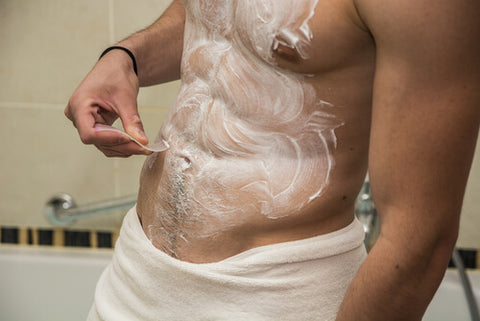
Most guys groom stomach hair. According to our survey, 86 percent of men participate in this activity to some degree. How the hair is groomed varies from guy to guy, but it's extremely common to bet belly hair under control.
Do you use a razor or a trimmer for stomach hair?
Trimmers are preferable to razors for stomach hair. You're allowed to shave, but a lot of guys like to leave a groomed happy trail. Because of this, we found that 74 percent of guys opt for a trimmer on the tummy, while only 16 percent ever reach for the razor.
Have you ever gotten ingrown hair from grooming your stomach hair?
Unfortunately, ingrown stomach hair is a common problem. We found that 46 percent of men have experienced this firsthand; when you consider that a lot fewer shave, it's easy to see that ingrown hairs can come from any form of grooming.
Has using The Lawn Mower 5.0 trimmer helped avoid ingrown hairs on your stomach?
Yes. The Lawn Mower 5.0 trimmer is designed for gentle grooming. It is less likely to sharpen hairs that are cut, and if you use the cutting guard, the hair will not be short enough to become ingrown. In our survey, 84 percent of men noted that they are at a reduced risk of getting ingrown hairs when using The Lawn Mower trimmer.
01.12.21
Share

Related Articles


Featured Articles
- Your Favorite Ball Deodorant. Now with a New Scent: Perservere.MANSCAPED® + TCS for Testicular Cancer Awareness MonthIntroducing The Lawn Mower® 5.0 Ultra TCS Special Edition and TCS Ball Hero BundleThe Dome Shaver™ Pro vs. The Dome Shaver™ Plus: Which Should You Choose?The Chairman™ Pro vs. The Chairman™ Plus: Which Should You Choose?